
In the high-stakes environment of precision manufacturing, materials science, and aerospace engineering, the question of where to find thermal ovens is more than a logistical query—it is a decision that dictates long-term operational ROI. Thermal processing is the backbone of product integrity; a variance of even a few degrees or a failure in atmospheric control can result in catastrophic batch loss or compromised structural safety.
For procurement managers and lead engineers, the search for a thermal oven supplier must move beyond surface-level specifications. It requires identifying a partner capable of delivering thermal uniformity, energy efficiency, and long-term mechanical reliability. This guide analyzes the critical criteria for sourcing industrial thermal solutions and explains why high-specification equipment from leaders like SNOL represents the gold standard in thermal engineering.
1. Defining Your Requirements: High-Temperature vs. Low-Temperature Solutions
Before determining where to find thermal ovens, you must categorize your application’s thermal profile. Industrial “ovens” typically operate up to 600°C, while “furnaces” handle the extreme heat required for hardening, sintering, and ceramics.
Precision Laboratory and Small-Batch Processing
For R&D and specialized laboratory applications, precision is non-negotiable. Small-scale thermal units must provide rapid heating times and high stability.
- The SNOL 0.2/1250 LXC04 Series: When searching for ultra-compact, high-precision heating, the SNOL 0.2/1250 LXC04 and the SNOL 0.4/1250 LXC04 offer elite performance in a small footprint. For slightly larger trial batches, the SNOL 0.8/1250 LXC04 provides the necessary volume without sacrificing temperature homogeneity.
Large-Scale Industrial Production
For mass production and heavy-duty thermal treatment, volume and insulation efficiency are the primary drivers of cost-effectiveness. High-capacity chambers must maintain uniform temperature distribution throughout the entire workspace to ensure consistency across the batch.
2. Where to Find Thermal Ovens for High-Capacity Manufacturing
Finding a supplier that can scale with your production needs is critical. In industrial settings, reliability is measured by uptime and the ability to handle heavy loads at sustained high temperatures.
Optimized Capacity Solutions (1300°C Range)
When your search for where to find thermal ovens leads you to the 1300°C threshold, SNOL’s heavy-duty industrial line offers a spectrum of volumes to match specific throughput requirements:
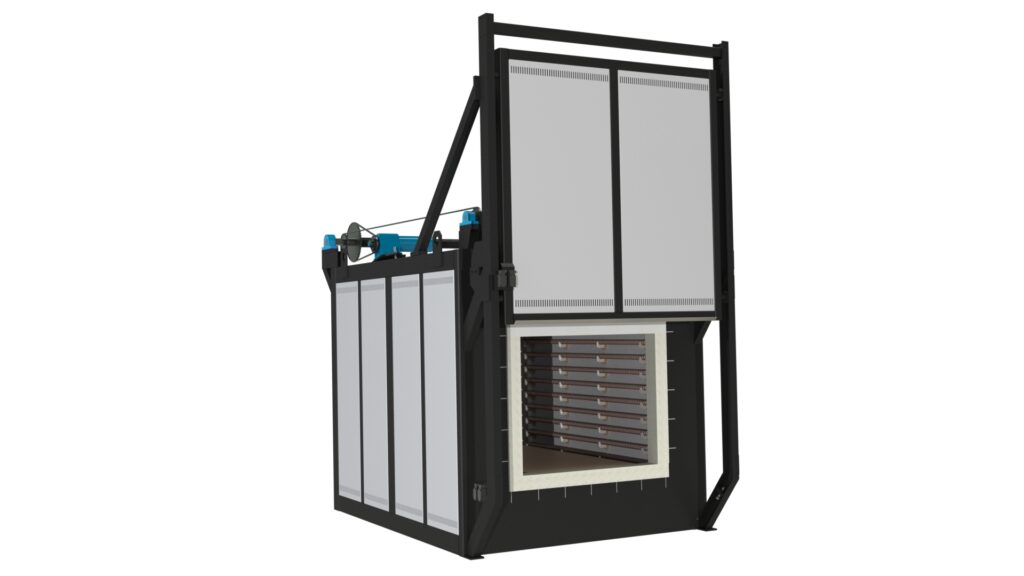
- Mid-Range Capacity: The SNOL 400/1300 and SNOL 500/1300 are ideal for medium-sized components or optimized batch processing.
- High-Volume Industrial Power: For large-scale manufacturing, units such as the SNOL 800/1300, the SNOL 970/1300, and the SNOL 1000/1300 provide the robust internal volume needed for heavy industry.
- Maximum Throughput: The SNOL 1250/1300 represents the pinnacle of large-scale thermal processing, offering expansive workspace for the most demanding industrial cycles.
3. Critical Criteria for Evaluating Thermal Oven Suppliers
Knowing where to find thermal ovens is only the first step. Evaluating the technical merit of the equipment is what prevents costly procurement errors. A high-level B2B strategist looks for the following “Three Pillars of Thermal Engineering”:
I. Thermal Uniformity and Control
Uniformity is the difference between a successful cure and a brittle failure. Look for ovens that utilize:
- High-grade ceramic or fiber insulation to minimize heat loss.
- Advanced PID controllers for precise temperature ramping.
- Multi-zone heating elements to prevent “cold spots” in larger chambers.
II. Material Durability and Chassis Engineering
Industrial ovens operate in harsh environments. The outer casing should be powder-coated or stainless steel to prevent corrosion, while the interior must be constructed from materials that resist thermal shock.
III. Energy Efficiency and Sustainability
With rising energy costs, the “total cost of ownership” (TCO) is a vital metric. Ovens with superior thermal lag and high-efficiency insulation reduce the kilowatt-hour consumption per cycle, contributing directly to the bottom line.
4. The Sourcing Process: 5 Steps to Professional Procurement
When deciding where to find thermal ovens and which model to select, follow this consultative process:
- Audit Thermal Profiles: Define your maximum temperature, required ramp rates, and dwell times.
- Calculate Load Volume: Determine the physical dimensions of your largest part and the total weight per batch.
- Evaluate Connectivity: In the era of Industry 4.0, ensure your thermal oven can integrate with data logging software for quality assurance compliance (e.g., AMS2750F standards).
- Assess Support and Maintenance: Ensure the vendor provides comprehensive technical documentation and readily available spare parts.
- Pilot Testing: For specialized materials, consult with the manufacturer to ensure the airflow and heating element placement align with your material’s specific requirements.
5. Why Partner with SNOL?
When you consider where to find thermal ovens that balance European engineering excellence with global accessibility, SNOL emerges as more than a vendor—it is a strategic partner.
With over 60 years of experience in thermal processing, SNOL equipment is designed for longevity. Our solutions are used across the aerospace, automotive, and medical sectors, where the margin for error is zero. By choosing a SNOL furnace or oven, you are investing in:
- Precision Engineering: Every unit is calibrated to meet rigorous international standards.
- Scalability: From the laboratory-scale SNOL 0.2/1250 LXC04 to the massive SNOL 1250/1300, the product line grows with your business.
- Consultative Approach: We work with your engineers to identify the exact specifications required for your specific material applications.
Conclusion
The search for where to find thermal ovens ends with a commitment to quality. Settling for a generic heating solution often results in higher maintenance costs and inconsistent product quality. By prioritizing high-spec equipment—ranging from compact laboratory units to high-volume industrial furnaces—manufacturers can secure their production lines for decades to come.
For those ready to upgrade their thermal capabilities, exploring the SNOL range provides a clear path to engineering excellence and operational efficiency. Whether your needs are for R&D or heavy industry, the right thermal solution is an investment in your company’s competitive edge.
Customized for your hot inovations
Innovative custom solutions and professional support for your needs in heat treatment processes.
Learn more