
Determining the Best Heat Treatment Furnaces for Industrial Scalability and Precision
In the high-stakes sectors of aerospace, automotive manufacturing, and advanced metallurgy, the margin for error in thermal processing is non-existent. Selecting the best heat treatment furnaces is no longer a simple procurement task; it is a strategic investment in product integrity and operational ROI. As thermal engineering evolves toward tighter tolerances and smarter automation, manufacturers must look beyond basic temperature ratings to evaluate total cost of ownership (TCO) and atmospheric control.
At SNOL, we recognize that a furnace is a critical node in your production value chain. This guide analyzes the technical requirements for high-performance heat treatment and explores why precision-engineered solutions are the cornerstone of modern industrial excellence.
1. The Engineering Standard: What Defines the Best Heat Treatment Furnaces?
The “best” furnace is not defined by peak temperature alone, but by its ability to maintain uniformity and repeatability under rigorous duty cycles. When evaluating equipment for hardening, annealing, or stress-relieving, three technical pillars must be prioritized:
- Thermal Uniformity: Precision across the entire chamber volume ensures that every component in a batch achieves the same metallurgical properties.
- Atmospheric Integrity: For processes requiring inert gas environments, the quality of the ceramic fiber insulation and the sealing of the chamber are paramount to prevent oxidation.
- Control Sophistication: Modern heat treatment requires programmable PID controllers that allow for complex ramp/soak profiles, minimizing human error and maximizing batch consistency.
2. Laboratory and Small-Batch Excellence: The SNOL LXC04 Series
For R&D facilities and specialized small-component manufacturing, the best heat treatment furnaces are those that offer rapid heating and exceptional stability in a compact footprint. The SNOL LXC04 series represents the pinnacle of high-temperature laboratory technology, capable of reaching 1250°C with high-quality ceramic fiber thermal insulation.
Featured Precision Models:
- SNOL 0.2/1250 LXC04: An ultra-compact solution for micro-component testing and dental applications.
- SNOL 0.4/1250 LXC04: A mid-range laboratory model balancing chamber volume with rapid heat-up times.
- SNOL 0.8/1250 LXC04: The high-capacity choice for laboratory scale-up, ensuring maximum throughput for small-batch hardening.
Technical Advantage: These models utilize vacuum-formed ceramic fiber chambers, which offer superior thermal efficiency compared to traditional brick, significantly reducing energy consumption per cycle.
3. High-Capacity Industrial Solutions: The 1300°C Benchmark
As production scales, the physical demands on the heating elements and the chamber structural integrity increase. For industrial-scale heat treatment, the 1300°C threshold is critical for high-alloy steel processing and ceramic sintering.
The SNOL industrial series is engineered for durability and high-volume reliability. These systems are designed to withstand the rigors of 24/7 operations while maintaining precise temperature gradients.
The Industrial Hierarchy:
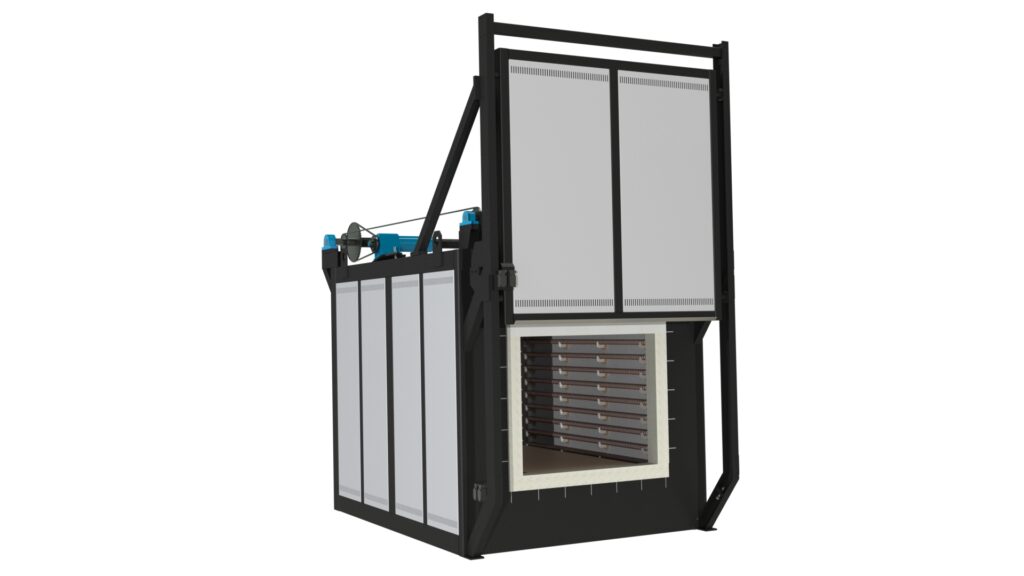
- SNOL 400/1300: Ideal for specialized tool and die shops requiring 400-liter capacity with high-temperature precision.
- SNOL 500/1300: A versatile workhorse for mid-to-large scale industrial heat treatment.
- SNOL 800/1300: Designed for large-format components, providing 800 liters of high-uniformity heating space.
- SNOL 970/1300 and SNOL 1000/1300: These high-capacity units are the industry standard for mass-production environments, where volume and thermal stability are the primary drivers of profitability.
4. Strategic ROI: Beyond the Purchase Price
When selecting the best heat treatment furnaces, senior decision-makers must look at the long-term financial impact. A “cheap” furnace often results in:
- High Scrappage Rates: Poor temperature uniformity leads to non-conforming parts.
- Energy Inefficiency: Substandard insulation increases overhead costs every hour the furnace is active.
- Downtime: Inferior heating elements require frequent replacement, halting production lines.
SNOL’s Consultative Approach: We do not simply sell equipment; we partner with your engineering team to ensure the furnace is optimized for your specific material science needs. This includes selecting the right control systems (from basic Omron to sophisticated Eurotherm solutions) and ensuring the heating element placement is optimized for your specific load geometry.
5. How to Select the Right Furnace: A 5-Step Process
To ensure you are investing in the best solution for your facility, follow this technical evaluation framework:
- Define Your Thermal Profile: Identify the maximum temperature required and the necessary dwell times. Always select a furnace with a maximum temperature slightly above your requirement to reduce strain on heating elements.
- Determine Chamber Volume: Calculate your batch sizes. Ensure there is adequate space around the load for air circulation or gas distribution to maintain uniformity.
- Evaluate Material Compatibility: Ensure the chamber lining (fiber vs. brick) and heating elements are compatible with any gasses or byproducts released during the heat treatment process.
- Assess Control Requirements: Do you require data logging for compliance (e.g., AMS2750F)? Ensure the furnace controller can interface with your plant’s SCADA or IoT systems.
- Analyze Power Consumption: Review the kW ratings and insulation efficiency. High-density ceramic fiber, as used in the SNOL 1000/1300, offers the best balance of heat retention and cooling speed.
6. The SNOL Advantage: Engineering Reliability
With over 70 years of experience in thermal engineering, SNOL has refined the art of furnace construction. Our systems are characterized by:
- Robust Construction: Outer casings are powder-coated to resist industrial wear and corrosion.
- Safety Integration: Independent over-temperature protection is standard across our high-capacity models.
- Global Support: A strategic partnership with SNOL includes access to technical expertise and rapid-response spare parts, ensuring your uptime remains a priority.
Conclusion
The search for the best heat treatment furnaces ends where precision engineering meets industrial durability. Whether you are utilizing the compact SNOL 0.2/1250 LXC04 for critical R&D or the massive SNOL 1000/1300 for heavy-duty manufacturing, the objective remains the same: total control over the thermal environment.
In a world where manufacturing quality is the ultimate competitive advantage, SNOL provides the thermal foundations for your success. Contact our engineering team today to discuss how we can optimize your heat treatment workflow.
Customized for your hot inovations
Innovative custom solutions and professional support for your needs in heat treatment processes.
Learn more