
The Ultimate Guide to Tools for Chamber Thermal Processing: Engineering Precision and ROI
In the high-stakes environment of industrial manufacturing, the selection of tools for chamber thermal processing is more than a procurement decision; it is a strategic investment in product integrity and operational longevity. Whether your facility is focused on aerospace-grade tempering, ceramic sintering, or advanced material aging, the equipment used must bridge the gap between theoretical thermal dynamics and repeatable production outcomes.
Thermal processing requires an ecosystem of precision-engineered components designed to manage heat transfer, atmosphere control, and structural integrity under extreme conditions. This article explores the critical tools and technologies driving the modern thermal processing landscape, with a focus on high-capacity industrial solutions that maximize Return on Investment (ROI).
1. Understanding the Core Tools for Chamber Thermal Processing
At its most fundamental level, chamber thermal processing involves a controlled environment where heat is applied to a workpiece to alter its physical or chemical properties. To achieve this at an industrial scale, several key “tools” or subsystems must work in perfect synchronization.
High-Temperature Insulation Systems
Modern chamber furnaces utilize multi-layer insulation—often combining vacuum-formed fiber and refractory bricks—to minimize heat loss. This not only ensures temperature uniformity but also significantly reduces energy consumption, a primary factor in long-term ROI.
Precision Heating Elements
The choice of heating elements (such as Kanthal, Silicon Carbide, or Molybdenum Disilicide) determines the furnace’s ramp rate and maximum operational ceiling. For high-demand industrial applications, resistance wire heating on ceramic tubes or in grooves is the industry standard for durability and ease of maintenance.
Advanced Control Interfaces
A chamber is only as effective as its controller. Modern tools for chamber thermal processing utilize PID (Proportional-Integral-Derivative) controllers and PLC-based systems to manage complex thermal profiles with minimal overshoot.
2. Strategic Equipment Selection: Analyzing High-Capacity Solutions
When scaling production, the volume and temperature threshold of your chamber furnace are the two most critical variables. SNOL’s industrial line provides a benchmark for high-volume chamber furnaces that integrate heavy-duty construction with sophisticated thermal management.
Industrial Benchmarks for Large-Scale Processing
For facilities requiring expansive workspaces and temperatures ranging from 1200°C to 1300°C, the following configurations represent the pinnacle of thermal engineering:
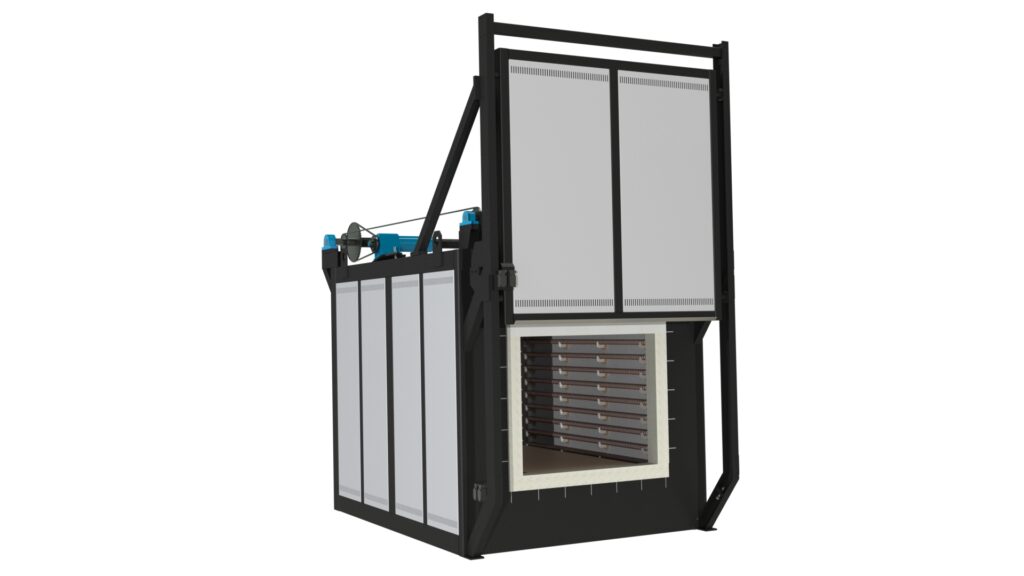
- 2200-Liter Capacity: Optimized for medium-to-large batch processing.
- 2500-Liter Capacity: Balancing footprint with high-throughput capabilities.
- 3400-Liter Capacity: Engineered for heavy industrial components and high-density loads.
- 4000-Liter Capacity: The flagship for maximum volume thermal processing.
3. Technical Specifications: What Drives Performance?
When evaluating tools for chamber thermal processing, engineers must look beyond the “max temperature” sticker. The following technical specifications dictate the success of the thermal cycle:
- Temperature Uniformity: Essential for ensuring that a part at the corner of the chamber receives the same treatment as a part in the center. High-end units typically achieve ±5°C or better in an empty chamber.
- Chamber Lining: Utilizing high-quality thermal insulation materials to ensure the outer casing remains safe to touch while the interior exceeds 1000°C.
- Loading Mechanisms: Whether manual, lift-door, or bogie hearth, the door mechanism must ensure a hermetic seal to prevent thermal leakage and protect the heating elements from oxidation.
4. The Process: 5 Steps to Optimizing Thermal Workflow
Implementing a new thermal processing tool requires a methodical approach to ensure safety and precision.
- Thermal Profile Definition: Determine the exact ramp rates, soak times, and cooling stages required for the specific material.
- Chamber Calibration: Before initial production, the chamber should undergo a Temperature Uniformity Survey (TUS) to identify any cold spots.
- Loading Optimization: Arrange workpieces to allow for natural convection or radiant heat paths, ensuring no “shadowing” occurs between parts.
- Atmosphere Management: If the process is sensitive to oxidation, utilize inert gas injection or vacuum-sealed chambers.
- Data Logging and Compliance: Utilize digital recording tools to track every cycle, ensuring traceability for ISO or Nadcap certifications.
5. Beyond the Hardware: SNOL as a Strategic Partner
The purchase of a furnace is the beginning of a decade-long operational cycle. A strategic partner provides more than just the tool; they provide the engineering support to ensure that tool remains an asset.
Reliability and Maintenance
SNOL’s industrial furnaces are designed with modularity in mind. Heating elements and thermocouples—the “consumables” of the thermal world—are positioned for rapid replacement, minimizing downtime.
ROI and Energy Efficiency
By utilizing state-of-the-art insulation and high-efficiency heating controllers, the cost-per-cycle is significantly reduced. Over the lifespan of a SNOL 4000/1300, the energy savings alone can often offset a significant portion of the initial capital expenditure.
6. Conclusion: Future-Proofing Your Thermal Department
The evolution of tools for chamber thermal processing is moving toward greater automation, IoT integration for remote monitoring, and even higher energy standards. Choosing a high-capacity furnace like the SNOL 3400 series ensures that your facility is equipped to handle the demands of tomorrow’s materials today.
Investing in precision thermal tools is an investment in the quality of your brand. By prioritizing uniformity, volume, and technical support, manufacturers can transform their thermal processing department from a cost center into a competitive advantage.
Are you ready to optimize your thermal workflow? Explore the full range of SNOL industrial chamber furnaces and consult with our engineering team to find the ideal configuration for your specific application.
Customized for your hot inovations
Innovative custom solutions and professional support for your needs in heat treatment processes.
Learn more