
The Definitive Guide to Tools for Comparing Furnace Vendors: A Strategic Framework for Thermal Engineering
In the high-stakes environment of industrial thermal processing, selecting a laboratory or industrial furnace is not merely a procurement task; it is a long-term capital investment that dictates your facility’s operational throughput and research precision. To navigate the complex landscape of thermal equipment, stakeholders must utilize specific tools for comparing furnace vendors to move beyond surface-level quotes and toward Total Cost of Ownership (TCO) analysis.
When evaluating high-temperature solutions, the difference between a standard vendor and a strategic partner like SNOL lies in the intersection of metallurgical precision and engineering longevity. This guide provides the analytical framework and tools necessary to audit potential suppliers and ensure your chosen equipment—such as the high-capacity SNOL 1500/1200—meets the rigorous demands of modern industry.
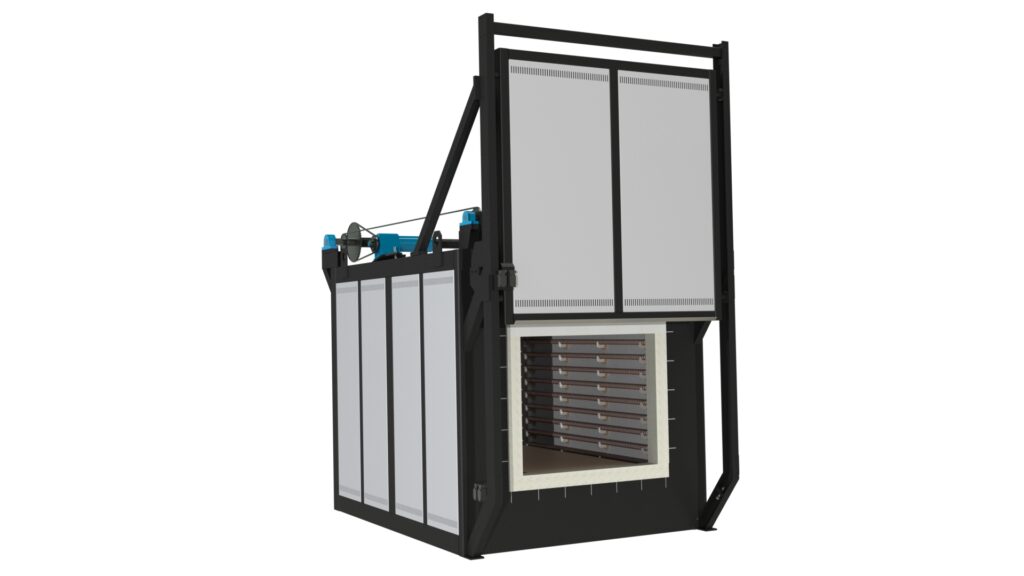
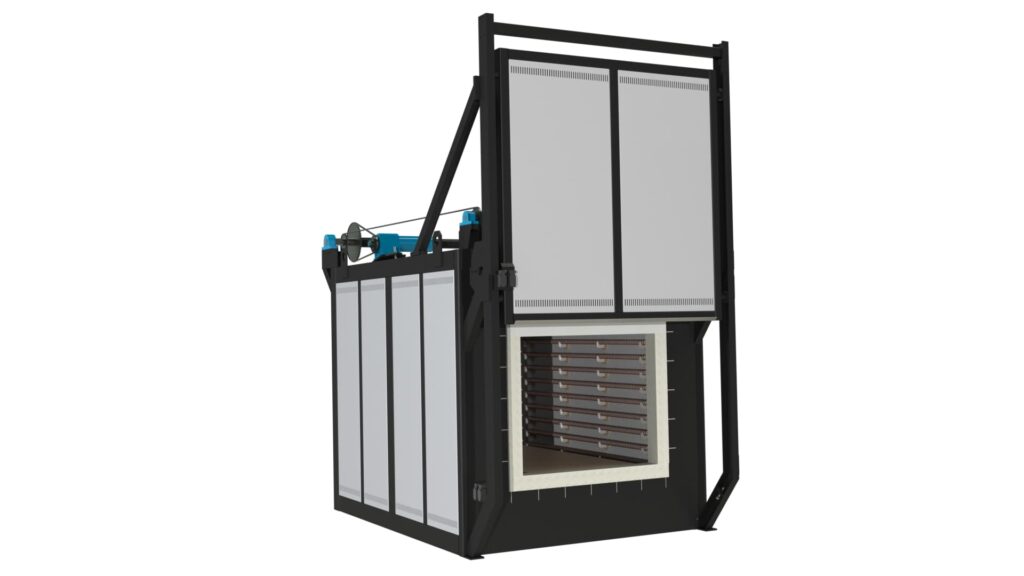
1. The Technical Specification Matrix: Beyond Maximum Temperature
The first tool in your arsenal should be a standardized Technical Specification Matrix. Many vendors highlight “maximum temperature,” but thermal engineering requires a deeper dive into stability and uniformity.
Key Metrics for Your Comparison Matrix:
- Temperature Uniformity (TUS): Does the vendor provide data according to AMS2750F or CQI-9 standards?
- Heating Element Composition: Is the equipment using Kanthal (FeCrAl), Silicon Carbide (SiC), or MoSi2 elements? This impacts both maintenance cycles and heating rates.
- Insulation Efficiency: Compare fiber-bound vs. brick-lined chambers. High-efficiency vacuum-formed fiber insulation, common in the SNOL 970/1200 series, significantly reduces heat loss and shell temperature.
- Controller Sophistication: Evaluate the PID (Proportional-Integral-Derivative) control capabilities. Can the system integrate with SCADA or provide digital data logging?
2. Total Cost of Ownership (TCO) Calculator
A common pitfall in comparing furnace vendors is over-weighting the initial purchase price. A strategic TCO tool calculates the cost over a 10-year lifecycle.
Steps to Calculate Furnace TCO:
- Acquisition Cost: Base price, shipping, and installation.
- Operational Energy Consumption: Calculate the kWh required to reach and maintain soak temperatures. SNOL’s advanced insulation in models like the SNOL 1200/1300 often yields a 15-20% reduction in energy costs compared to lower-tier competitors.
- Consumables and Wear Parts: Frequency and cost of replacing elements, thermocouples, and hearth plates.
- Downtime Risk: The cost of an unplanned production halt. Reliable engineering in the SNOL 1000/1200 line minimizes this variable through robust build quality.
3. The Vendor Reliability and Compliance Audit
When using tools for comparing furnace vendors, you must audit the “soft” infrastructure of the supplier. A furnace is only as good as the support behind it.
Compliance Checklist:
- ISO 9001 Certification: Ensures standardized manufacturing processes.
- CE Marking: Mandatory for safety and environmental protection requirements in the EEA.
- After-Sales Support: Does the vendor offer remote diagnostics or a guaranteed lead time for spare parts?
- Customization Capabilities: Can the vendor modify a chamber furnace to include protective gas atmospheres or specialized chimney extractors?
4. Scalability and Product Range Analysis
Your thermal processing needs today may not be your needs in five years. A vital tool for comparison is the “Product Roadmap Alignment.” Choosing a vendor with a wide range of capacities allows for seamless scaling.
For instance, a laboratory might start with a compact SNOL 970/1300 for R&D but eventually require the larger volume of a SNOL 1500/1300 for pilot production. Partnering with a manufacturer that maintains consistent control interfaces across their entire range—from the SNOL 1000/1300 to the SNOL 1200/1200—reduces the operator learning curve and simplifies training.
5. Risk Mitigation: The “Failure Mode” Comparison
Proactive engineers use a Failure Mode and Effects Analysis (FMEA) tool when comparing vendors. Ask potential suppliers:
- Safety Interlocks: What happens if a thermocouple fails? (SNOL units include independent over-temperature protection).
- Door Integrity: How does the door seal prevent heat leakage and protect the operator? Compare the lift-door mechanisms vs. swing-door designs.
- Cold Face Temperature: What is the exterior shell temperature during a 1200°C soak? High-quality vendors prioritize operator safety through double-wall ventilated casings.
Why SNOL Emerges as the Strategic Choice
In any data-driven comparison of furnace vendors, SNOL consistently ranks at the top for ROI and engineering integrity. With over 60 years of experience, SNOL doesn’t just supply hardware; we provide thermal solutions engineered for the most demanding precision-dependent industries, including aerospace, dental, and materials science.
The SNOL Advantage:
- Precision Engineering: Accuracy and uniformity that exceed standard industry benchmarks.
- Global Footprint: Support and distribution networks that ensure your facility stays operational.
- Diverse Catalog: Whether you require the high-temperature capabilities of the SNOL 970/1300 or the robust volume of the SNOL 1500/1200, our portfolio is built to scale with your business.
Conclusion: Data-Driven Procurement
Selecting the right furnace requires moving past the brochure. By utilizing a Technical Specification Matrix, a TCO Calculator, and a Compliance Audit, you can objectively identify which vendor provides the best long-term value.
In the realm of high-temperature processing, “cheap” is often the most expensive option over time. Invest in precision, safety, and reliability. Explore the full range of SNOL chamber furnaces today to see how our engineering standards outperform the competition.
For a personalized consultation and a detailed technical comparison against your current thermal requirements, contact the SNOL engineering team.
Customized for your hot inovations
Innovative custom solutions and professional support for your needs in heat treatment processes.
Learn more